PANDEMICS
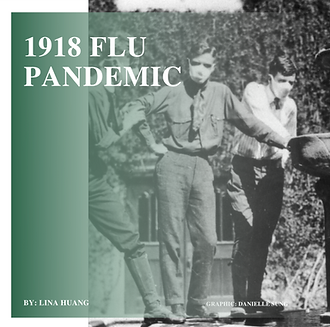
1918 flu pandemic
By lina huang
1918, the most severe pandemic in recent history, known as the “Spanish flu,” spread worldwide. The origin of the 1918 flu pandemic is unclear, the flu was first identified in the United States in the military during spring.
Experts estimate that about 500 million, or one-third of the world’s population, contracted the influenza. out of those, at least 50 million died worldwide. 675,000 succumbed to the disease in the United States, and the average life expectancy in the US was lowered by more than 12 years.
Air Pollution:An Unseen Viral Petri Dish
By BONA YOO
You’ve seen the news-- cars and factories have receded into quietude, and Mother Nature has taken the reigns in a triumphant flourish. Now, as governments ponder the gradual transition into reopening their countries, scientists warn that unless we change our ways, air pollution could instigate a second, and even more sinister, proliferation of the coronavirus.
90% of the human population live in a measurably polluted air environment. Responsible for as many as 5 million premature deaths each year, air pollution is merciless and well-known for its detrimental effects on the environment and human health. Recent studies, however, have attributed another key role to the particulate matter that swims in our skies: a carrier for oncoming disease.

A New Age of Vaccines
By Krish Patel
With nearly 4 million cases and 286,000 deaths inflicted by the novel coronavirus, COVID-19 (SARS-CoV-2), the pressing need for a vaccine is only growing. Each day over 75,000+ new cases accumulate, with the United States supplying roughly one-third of that number daily.
COVID-19 is a novel strain of SARS CoV, which caused the Severe Acute Respiratory Syndrome pandemic from 2002-2004. The overwhelming consensus is that this virus originated from bats, leaving humans unprepared causing the swift escalation to the pandemic we now face. Both these diseases are in the family of Coronavirus; meaning a crowned/hallo virus based on the microscopic view. According to the Centers for Disease Control, these two viruses share about 80% of their RNA; it’s important to remember that humans and chimpanzees share upwards of 98% of their DNA. Nevertheless, scientists believe that there are some critical similarities and differences between these two strains that could prove useful in the fight for a vaccine.


In the midst of all of the uncertainty in the world right now, one question that has been circling around is how the COVID-19 outbreak is affecting the climate crisis.Many of us have seen the pictures of this effect: flamingoes returning to clear waters by the Taj Mahal, clear skies over the Bei Jing skyline, dolphins swimming in the canals of Venice. There’s no doubt that the halting of air, ground, and sea traffic has greatly reduced impacted how much CO2 is being emitted into our atmosphere. But is this enough to make significant change in the global warming pattern? Will these changes even last by the end of the year?